About Us
What is the Peer-Supported Learning Centre?

The Peer-Supported Learning Centre (PSLC) helps students learn from each other. We run Peer-Supported Learning Groups (PSLG) - weekly, small-group study sessions for some of the toughest modules at UL.
The centre is based in the University of Limerick, in room C2-061, Main Building, and sits within the Centre for Teaching & Learning as one of five learner support centres on campus.
What is a PSLG session exactly?
A PSLG is a regular, weekly study group for a specific module - run by a student who's already passed it. It's not a repeat of the lecture. It's a space where students work through the material together, guided by a trained peer leader rather than taught by a lecturer.
What makes it work?
- It's led by peers, not lecturers. Group leaders are students who took the module in a previous year. They facilitate - they don't teach.
- It's built on your course material. Sessions work from your actual lecture notes, workbooks and textbooks, not a separate syllabus.
- It's social as well as academic. Small-group discussion means it's normal to ask questions you might not ask in a 200-person lecture theatre.
- It's collaborative. Everyone works through the material together - the group does the thinking, the leader keeps things on track.
The thinking behind PSLG

- Learning happens actively, in small groups.
- Students learn how to study a subject, not just the content itself.
- Everyone gets to practise using the subject's own language and vocabulary.
- Sessions run in a relaxed, low-pressure environment.
- The format works for students at any level - struggling, confident, or somewhere in between.
How a session actually runs
- Welcome - the leader opens the session.
- News round-up - anything relevant to the module that week.
- Lecture recap - a quick summary of that week's key points.
- Group discussion - the topic agreed the previous week gets tackled, usually in pairs or small groups, then discussed as a whole group.
- Next week's focus - the group agrees what to cover next time.
- A reminder email - the leader follows up 2-3 days before the next session with the agreed topic, so everyone comes prepared.
What a session might involve
- Turning lecture notes into summaries, mind-maps or quizzes to test understanding.
- Practising presentations and picking apart what makes one work.
- Breaking down essay questions - keywords, structure, referencing, and how to avoid plagiarism.
- Working through past exam papers and planning answers together.
- Swapping revision techniques that actually work.
- Working together to solve problems and apply concepts.
Why peer-supported learning works
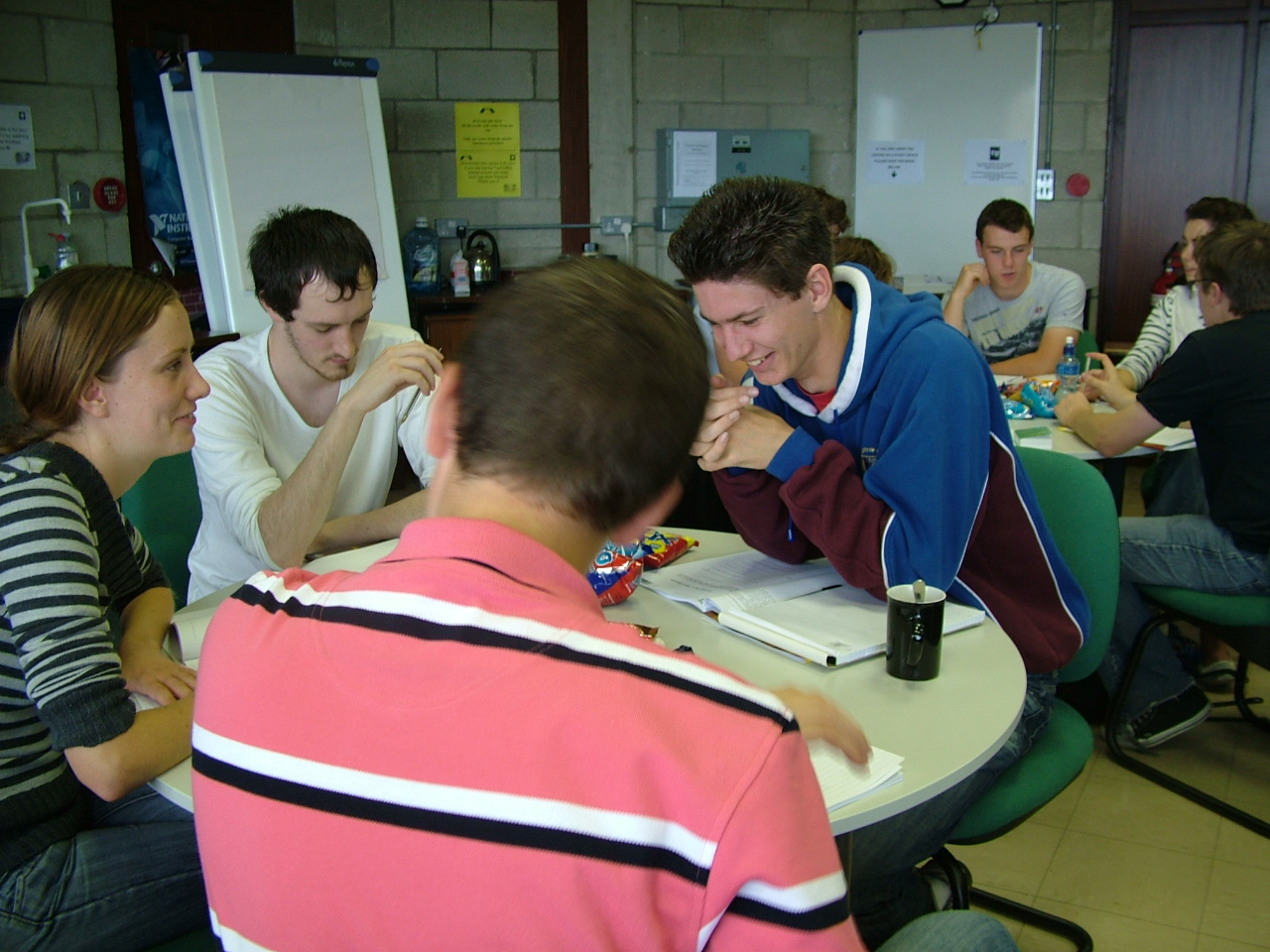
When you're learning from someone who sat exactly where you're sitting a year ago, the dynamic changes. It's a relationship between equals, which makes it easier to ask the "obvious" question, admit what you don't understand, and actually engage.
Research on peer-supported learning consistently points to the same benefits:
- Students become more active, independent learners.
- People ask more questions and give more feedback in peer settings than in a lecture.
- Students take more ownership of their own learning.
- Peer learning builds cooperation rather than competition.
- Skills and knowledge transfer better to new situations.
- Because the stakes feel lower, students are more willing to say "I don't get this" - which means fewer people stay stuck.
- Study groups formed in PSLG often keep going long after the sessions end.
- The informal, low-pressure setting builds confidence - something that matters most for first-year students finding their feet.
For a deeper analysis of the support and it's efficacy please visits our Does PSLG Work? page.
Sources: Topping & Ehly (1998), Velez, Wolf & Cano (2007), Royse (2001), Johnson & Johnson (1991).
Training our PSLG Leaders
At the start of every semester, we run training workshops for our student leaders - practical sessions covering the facilitation skills they'll need to run a good group.
We also train staff. If your department or college is thinking about starting a PSLG programme, we run hands-on workshops covering everything from setting one up to running, evaluating and sustaining it. Get in touch to find out more.
Want to see what's currently running? Check our list of supported modules.
Interested in setting up a PSLG for your module or department? Email peerlearning@ul.ie and we'll walk you through it.


